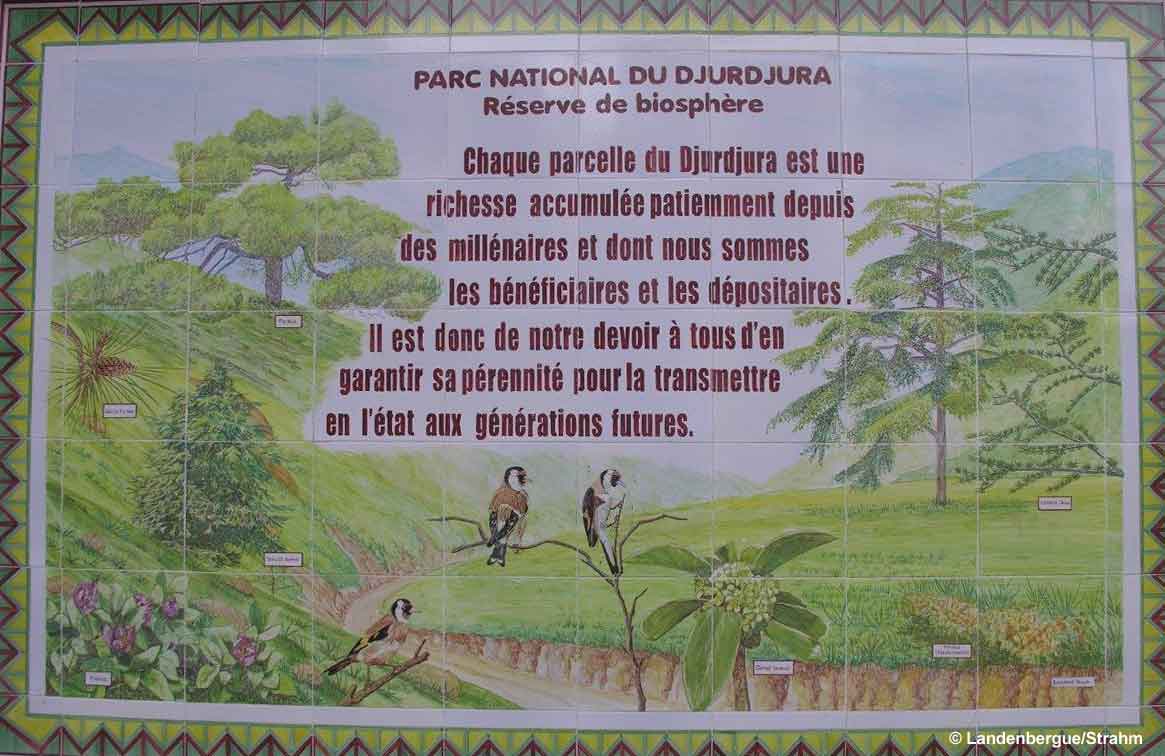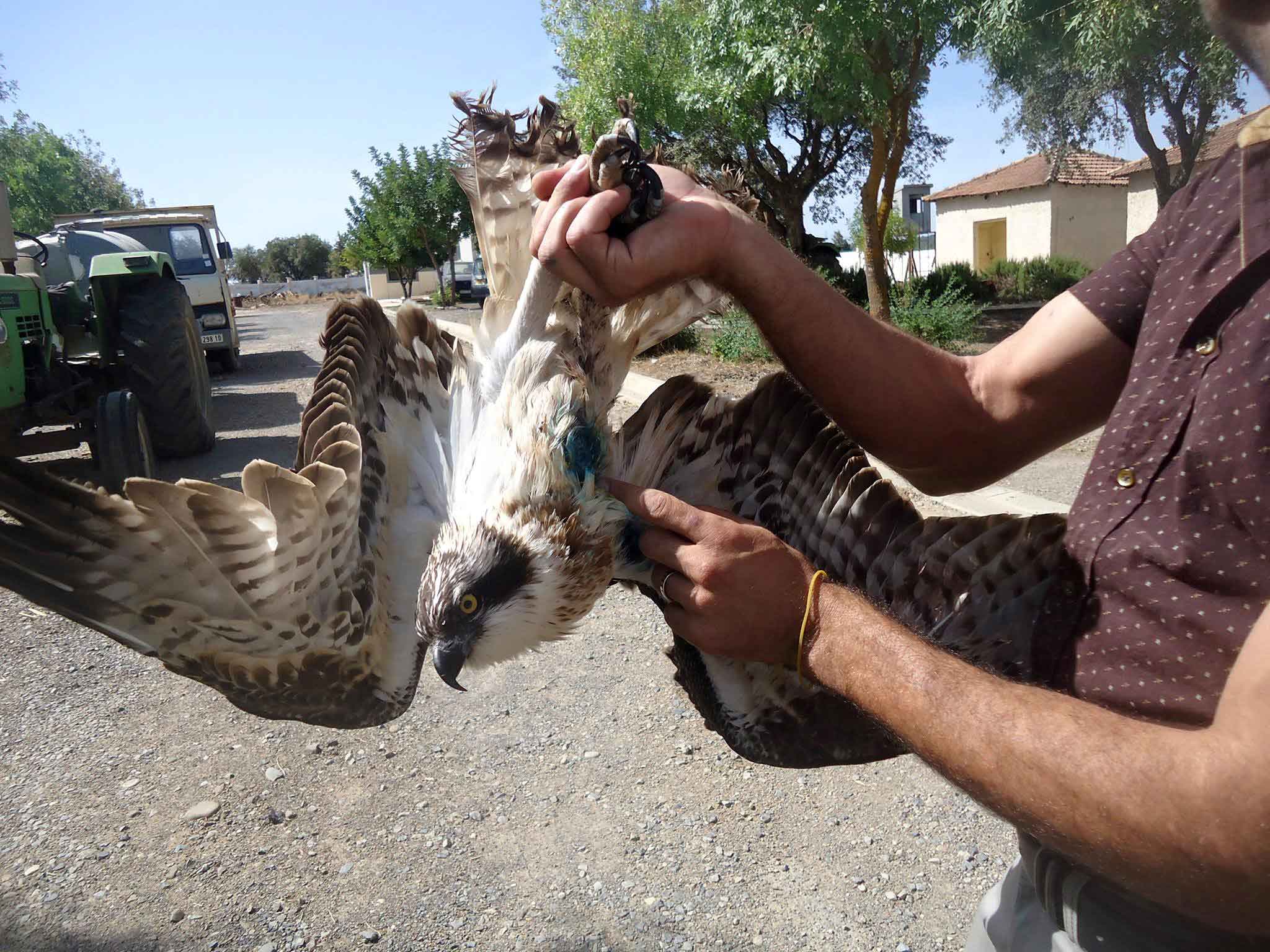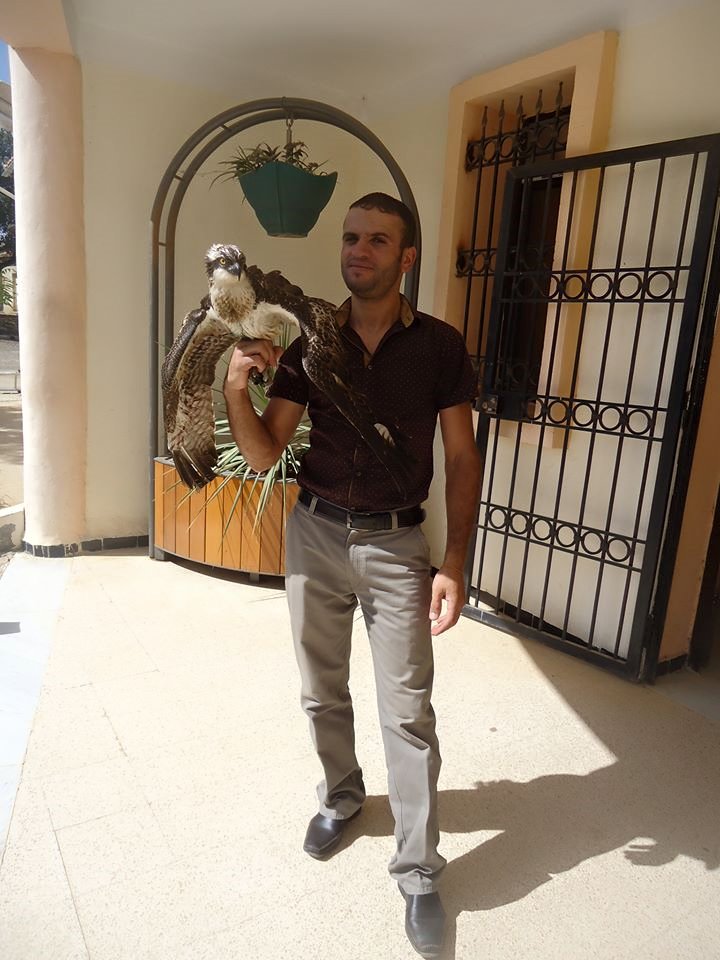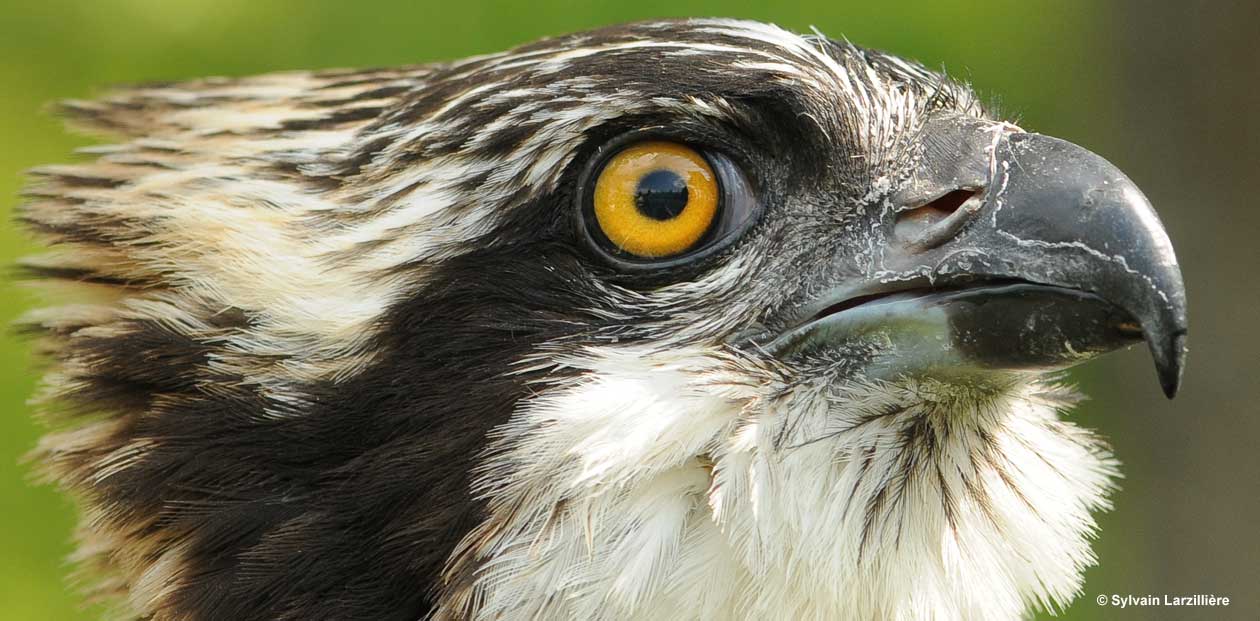
We recently received some shocking news from Algeria concerning one of our young ospreys called PP5 (nicknamed “Chernobyl” due to the markings on the back of his head which resemble a radiation symbol). This male had been found shot by a poacher in the region of the Djurdjura National Park, about 100 km east of the capital city Algiers.

The good news is that he is alive, thanks to the Park’s veterinarian Mr Toufik Brahimi, who operated on him and removed two shotgun pellets from his chest and the base of his wing. Mr Brahimi then contacted the Swiss Ornithological Station at Sempach, based on the inscription marked on his ring. We are now in direct contact with Mr Brahimi to discuss the best way to take care of PP5. He is fed daily with fresh fish and the latest news indicates that he seems to be on the road to recovery. Note that PP5 had left the Swiss reintroduction site on September 11, and had the misfortune to be shot on the 16th, exactly 5 days after his departure and some 1,200 km away after crossing the Mediterranean Sea.
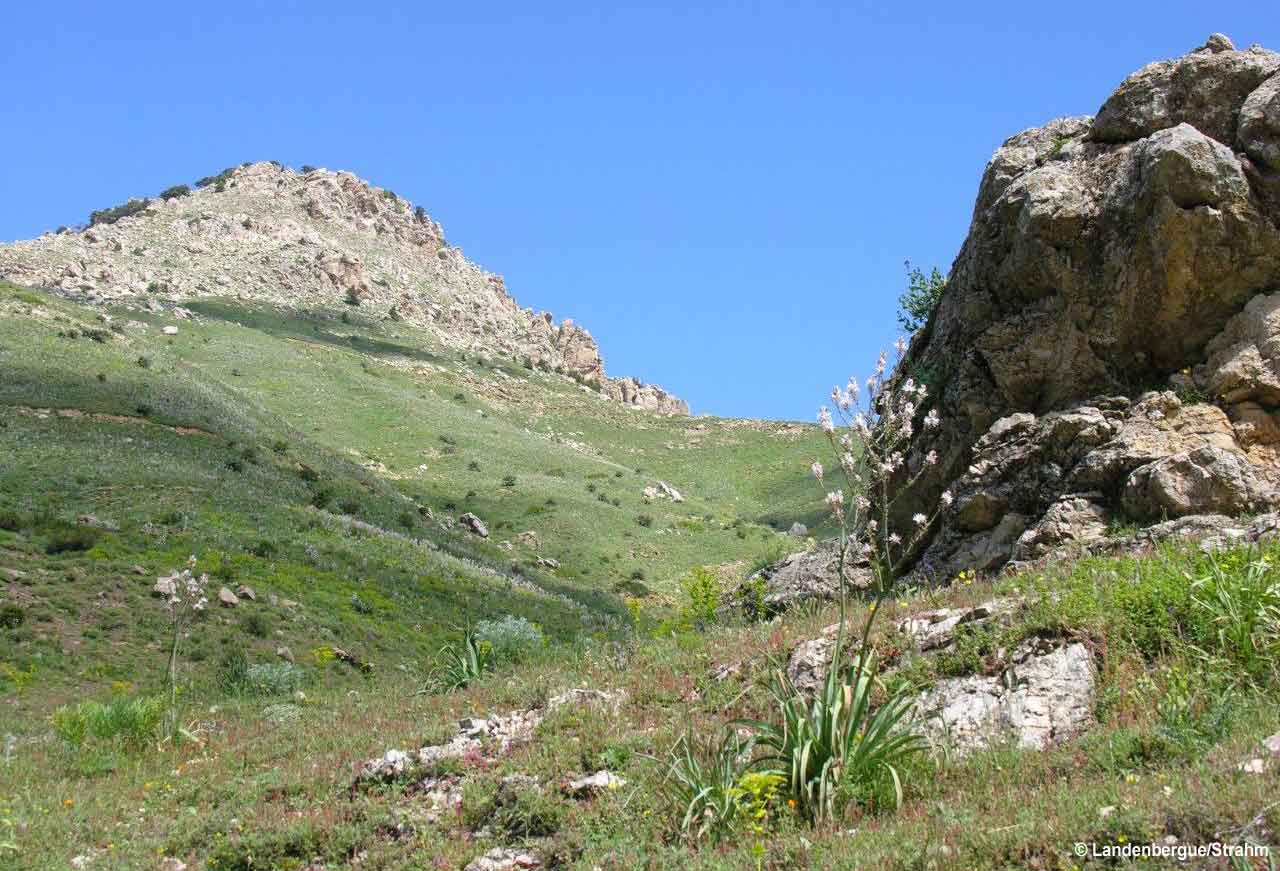
It is not yet possible to know if PP5 will make a full recovery from his terrible ordeal although we are hopeful. Coincidentally Mr Brahimi remembered meeting us (Denis Landenbergue and Wendy Strahm) when we visited the National Park of Djurdjura in 2008. One additional reason for him, as if it were needed, to do his best to save what he refers to as “our bird”.
It is well known that only a third of young Ospreys usually survive to adulthood. There are many possible causes of loss: natural predation, ocean gales, sand storms, collisions with vehicles, wires or electrical lines, poaching or shooting through ignorance, etc.
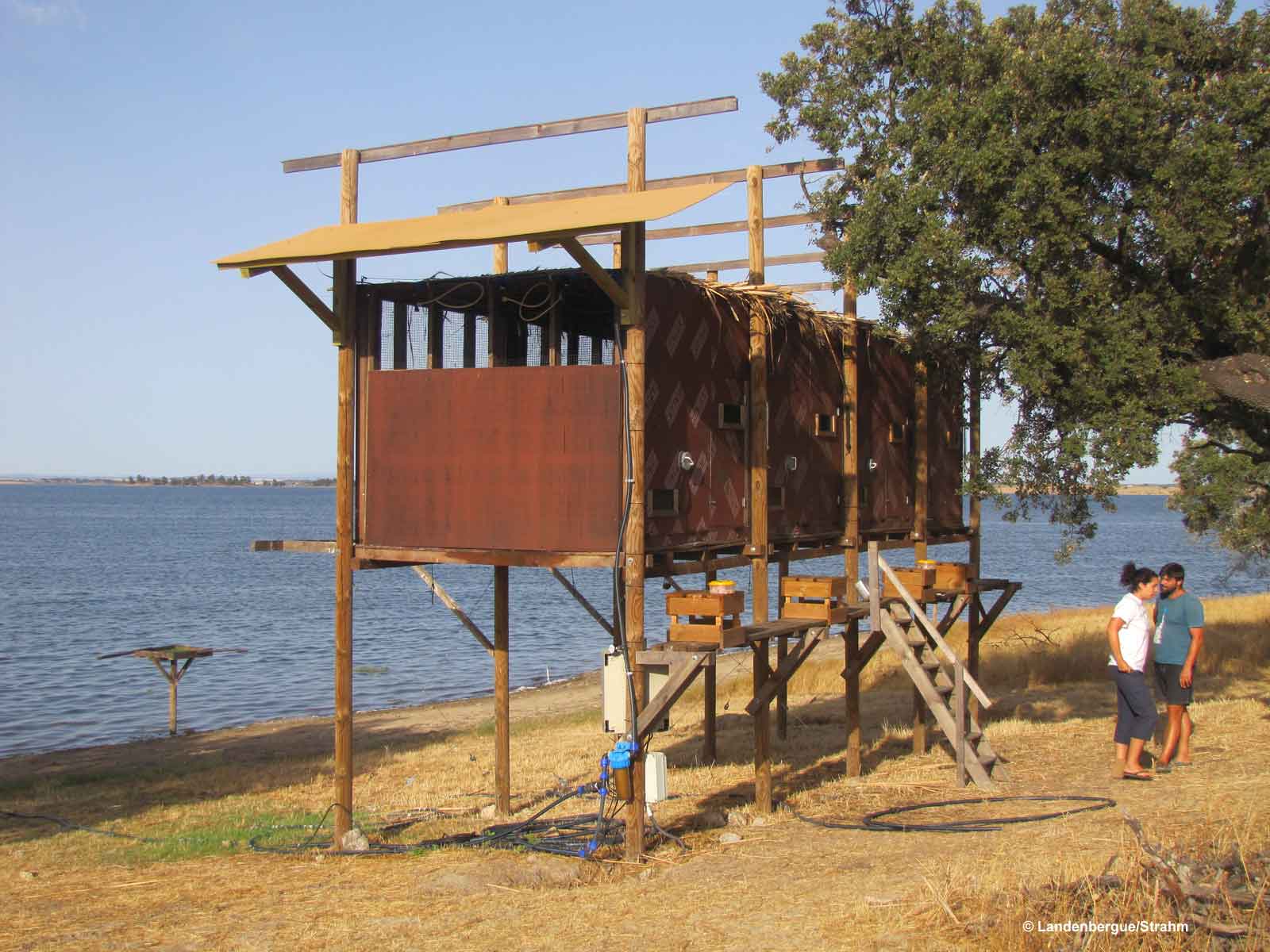
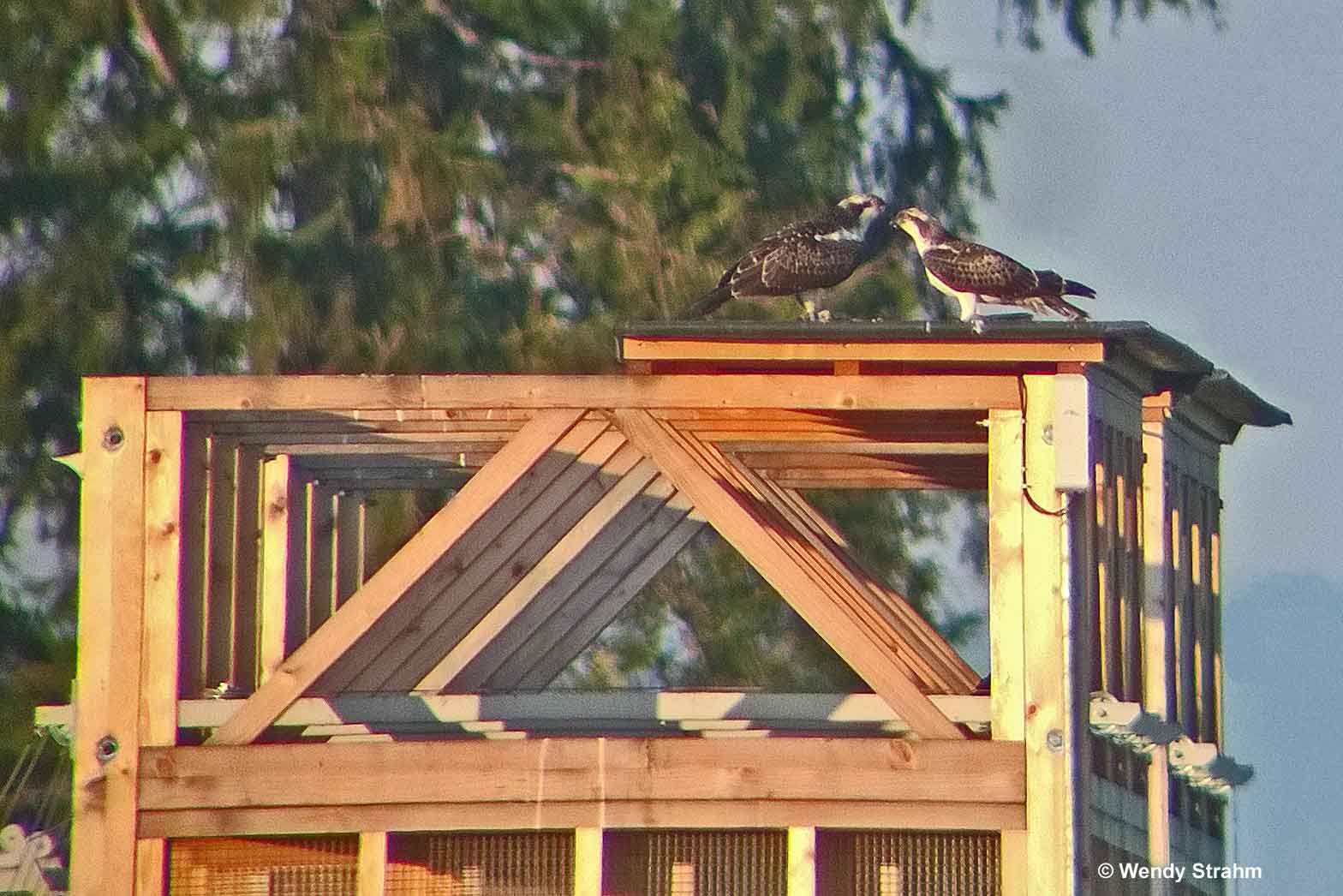
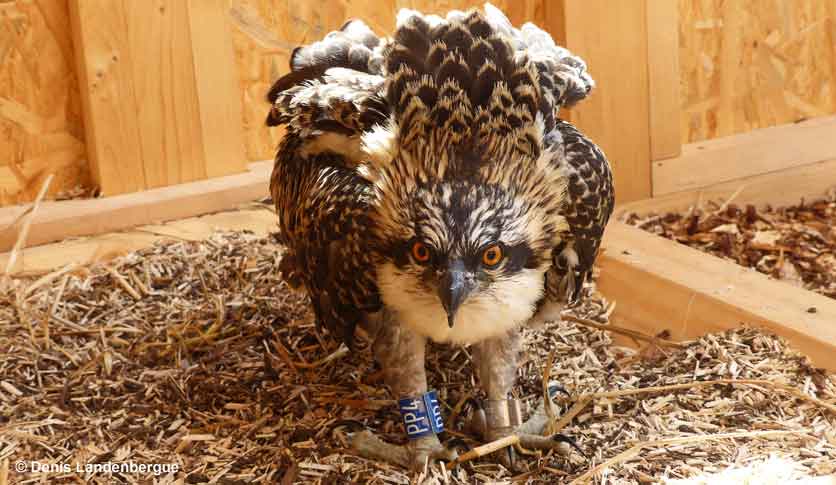
On September 19, our last two young Ospreys of the 2015 reintroduction season left for Africa. The project team were watching PP1 and PP4 (named after the code on their colour ring) when the female suddenly spiralled high into the sky before heading south. A few hours later PP4 did the same. The photo above shows the difference in size between PP1, the female (to the left), and PP4, the male, on top of their release aviary. Since September 19 we waited several days to be absolutely sure that they had really left. It is common that young ospreys first make a “false departure”, which might last up to 2 or 3 days, before returning to the reintroduction site for more food before they finally decide to set off. Now that we are sure that PP1 and PP4 have really left we wish them a safe journey, hoping that they will avoid the numerous risks that all Ospreys face from the moment they are born.
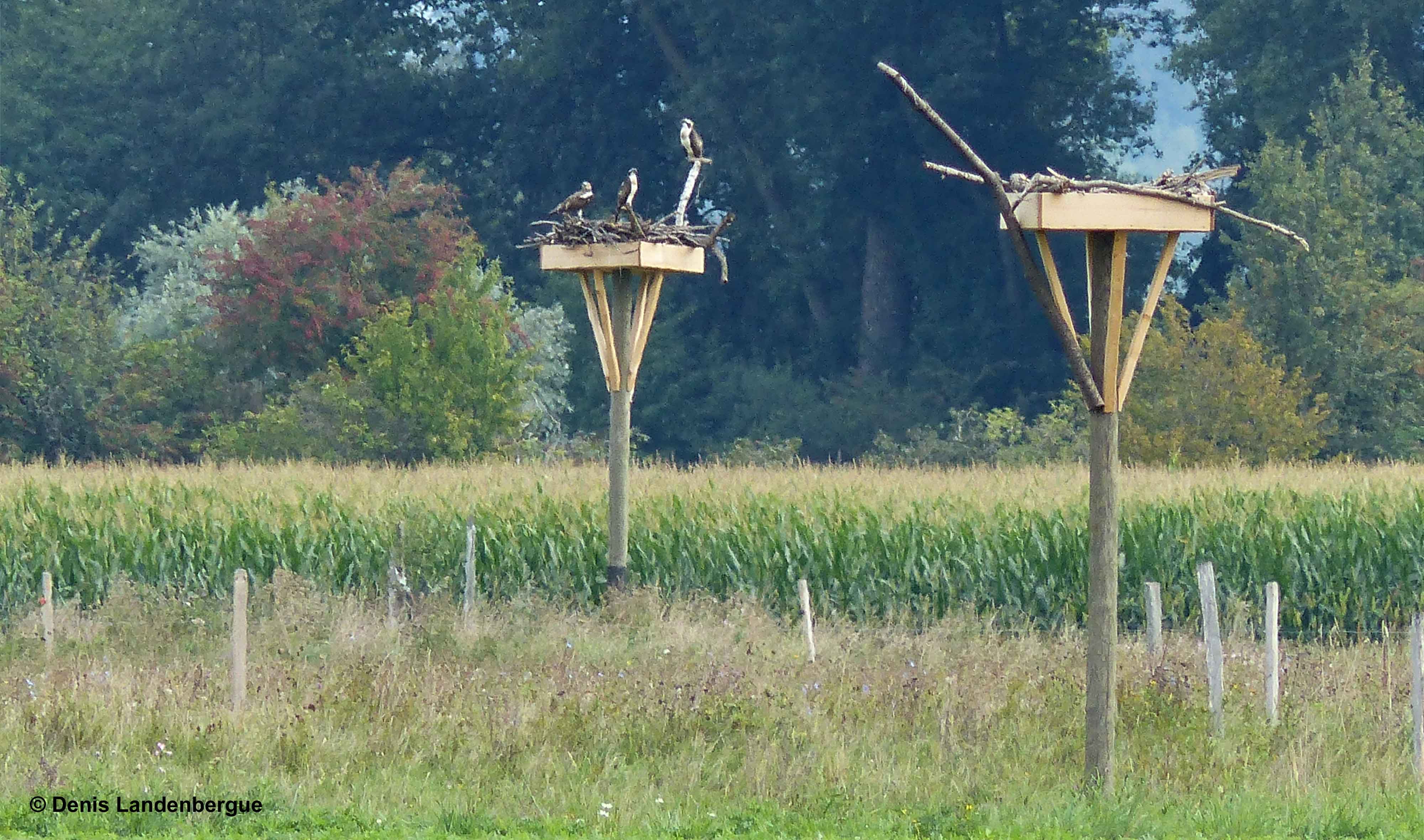
The photo above was taken shortly before PP5 (bird to the left) departed on migration on September 11. We built two nests in front of the aviaries so that the young Ospreys could get used to seeing them. We were delighted when they started to perch on the nests.


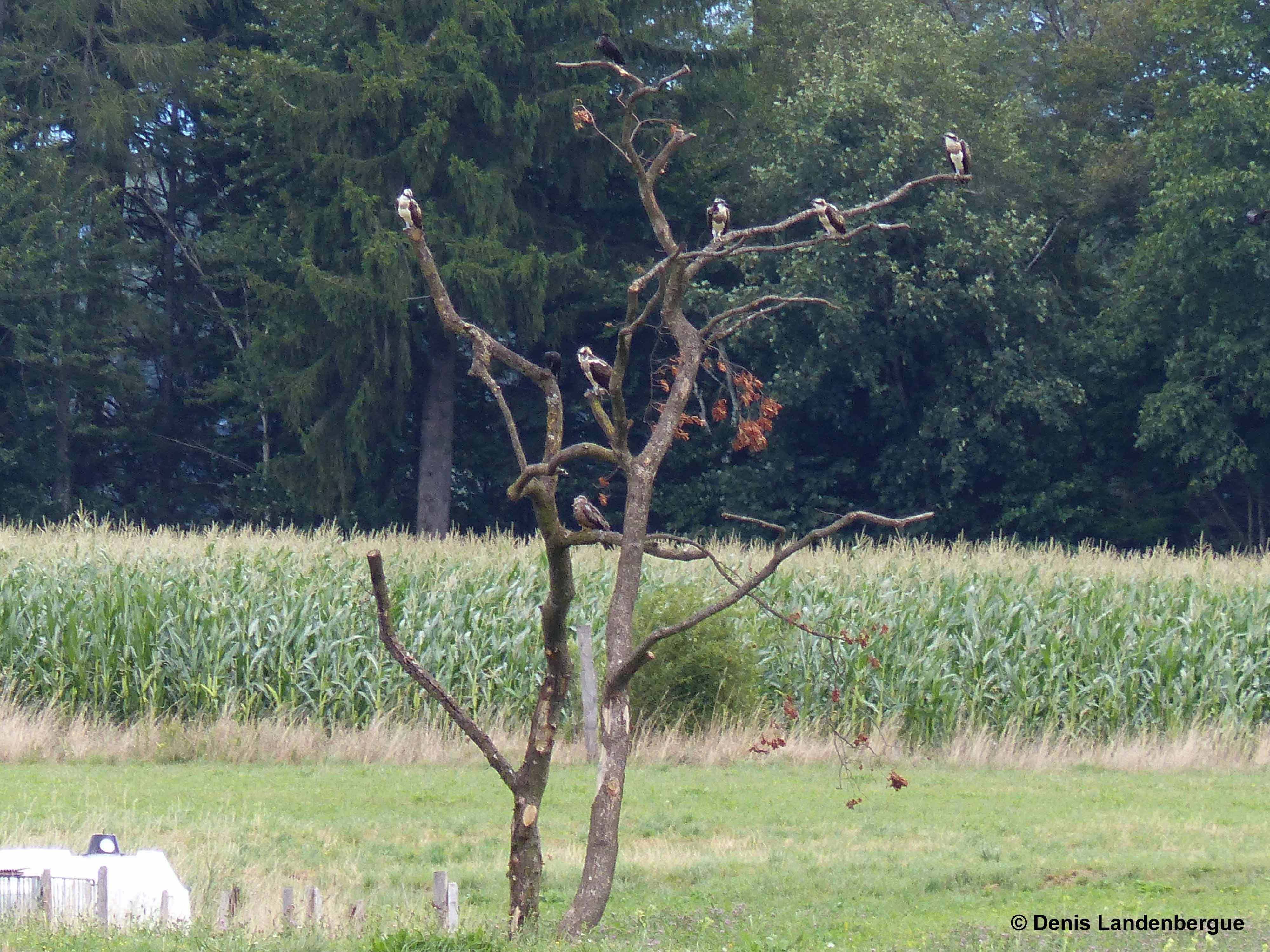
On August 8 and 11 we released our six Ospreys that had been cared for around the clock inside the specially built aviaries. Some, like PP6, took an hour to realise they were free before making their first flight, while others were content to sit inside the aviary for almost the entire day before taking the big step, or should we say jump. For example, we had begun to think that PP4 would never leave until at 18:30 he suddenly made a perfect take-off, spiralling high in the sky before making a fine landing on top of the aviary. It was as if he had been considering his first flight for the entire day and was determined to make a good job of it. The birds are now being fed twice a day, with fish being put out for them once before dawn, and then once in the afternoon. They are very susceptible to disturbance so the project team is watching them non-stop. It is very important that they are not frightened by anything and that they remain in the release area. Three dead trees were “planted” in front of the aviary and above is a unique photo when we had five young altogether, perched on two of the dead trees.
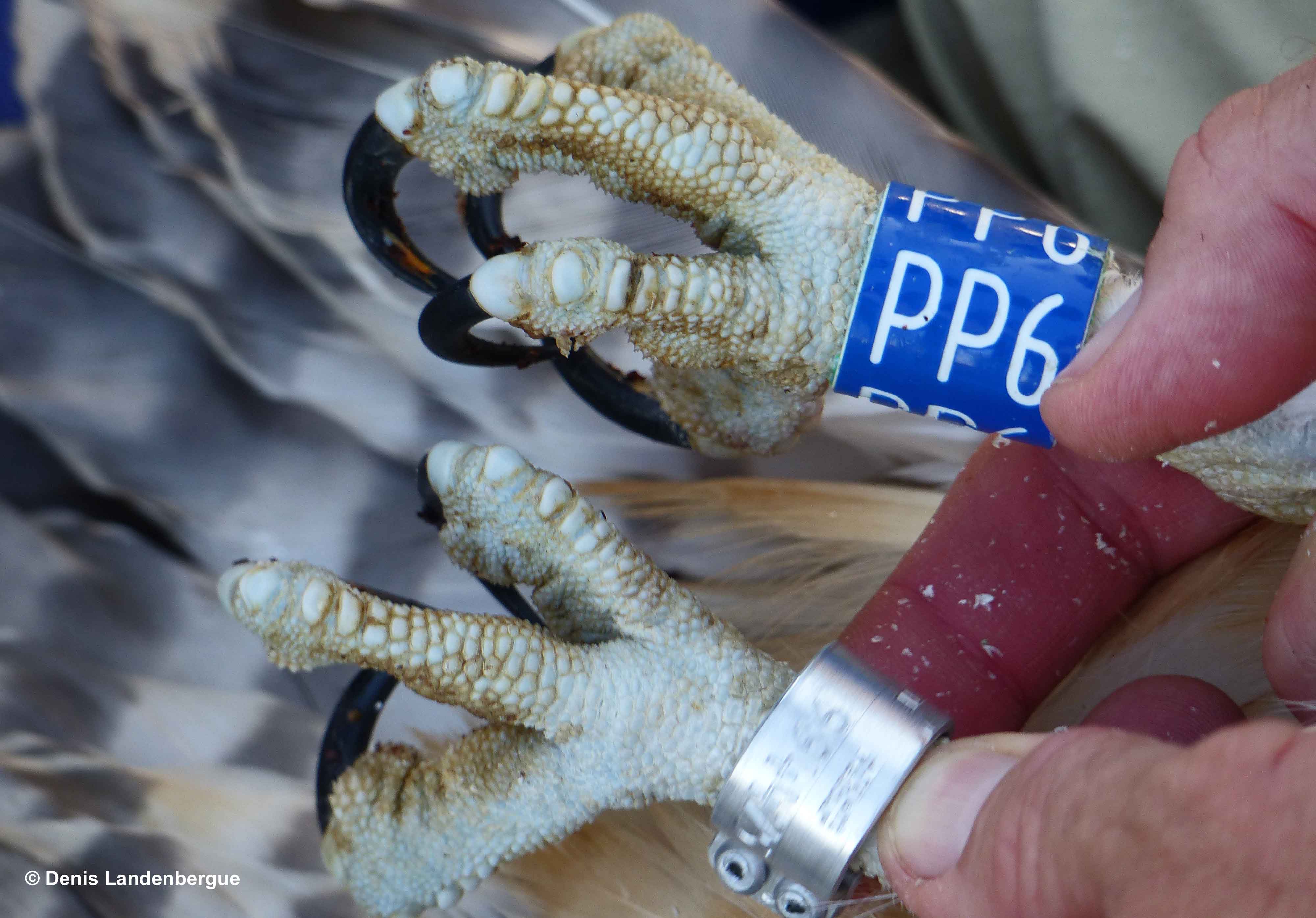
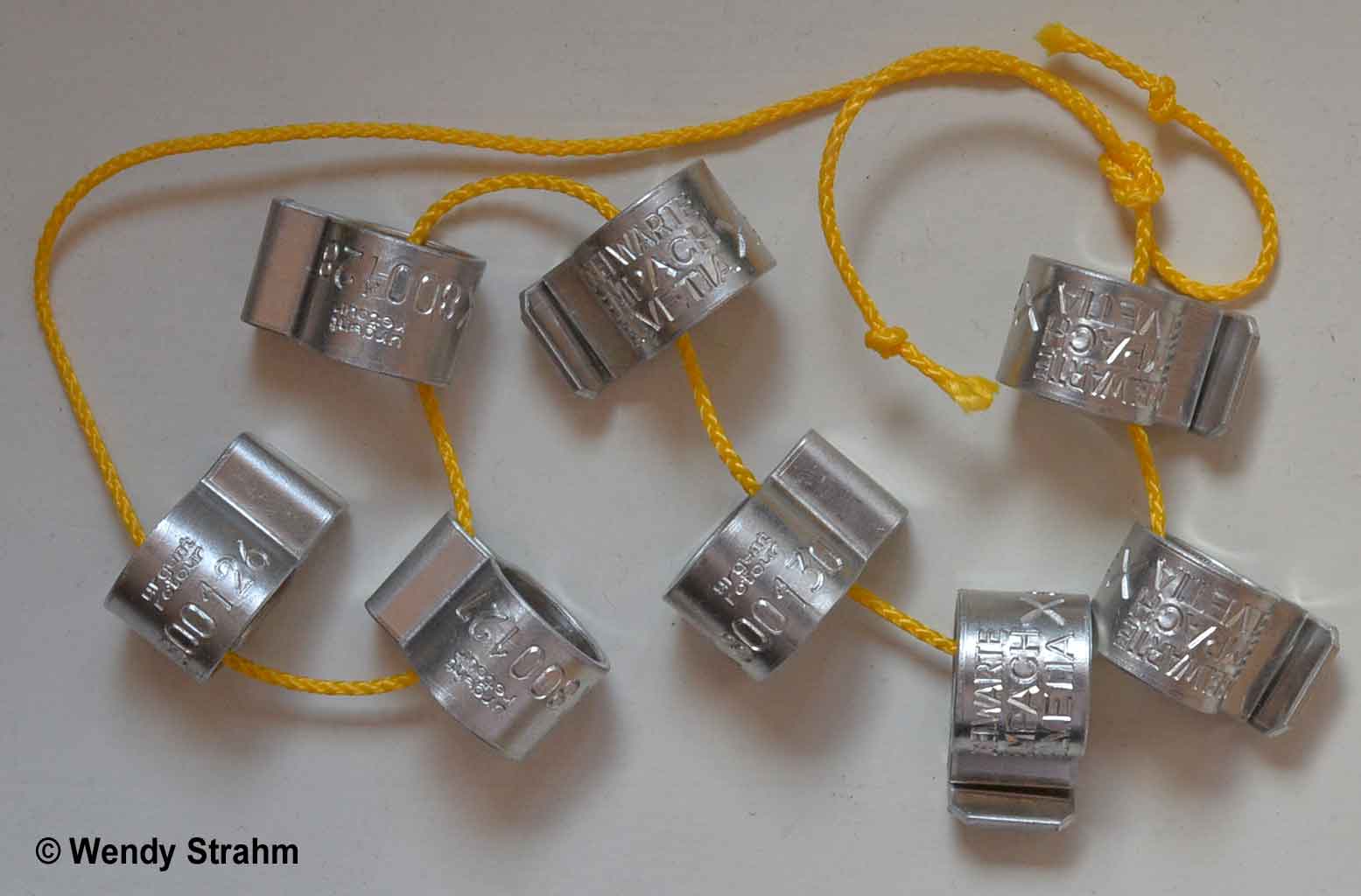
Each bird has a metal ring on the left leg and a plastic colour ring on the right leg. The rings do not hurt the birds nor do they worry them in any way. Rings are only allowed to be put on birds by licensed ringers, which for our project are Michel Beaud, Adrian Aebischer and Roy Dennis. The metal ring on the left leg is provided by the Swiss Ornithological Station (SOS) at Sempach and has a unique number. If someone finds a ringed bird they can inform the SOS who will then tell us that someone has seen the bird.